Half-Life Writer's Cyberpunk Tale Adapted for Netflix
Author: Max
Dec 11,2025


Marc Laidlaw penned "400 Boys" in 1981 at age 21, long before becoming Valve's lead writer and co-creator of Half-Life. Originally published in Omni magazine (1983), the cyberpunk short gained wider recognition in Bruce Sterling’s "Mirrorshades" anthology. On his website, Laidlaw notes this obscure work ironically reached more readers than anything except perhaps his Dota 2 promotional copy. While gaming history remembers him for Half-Life, his creative legacy extends far beyond.
In a ruined metropolis where rival gangs adhere to strict bushido codes, the anarchic 400 Boys disrupt the fragile status quo. Adapted by Robert Valley – Emmy-winning director of Love, Death & Robots’ "Ice" – this visually stunning episode juxtaposes poetic violence with striking animation.
"The idea sparked from Oregon street lamps," Laidlaw recalls. "Band posters covered every telephone pole with these electrifying names. I wanted that same energy – creating gang identities became the story's backbone. Who knew listing imaginary bands would shape an entire narrative?"
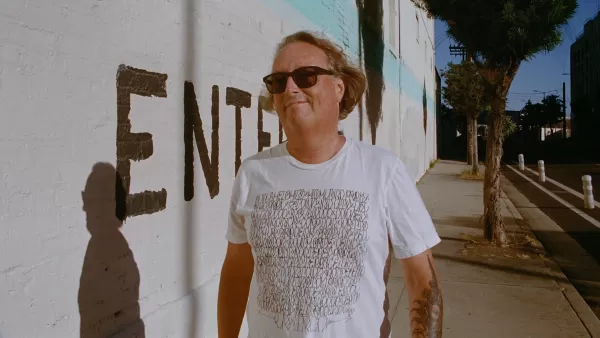
Four decades later, Netflix's Love, Death & Robots breathes new life into "400 Boys" with John Boyega (Star Wars) leading the voice cast. Directed by Valley (Zima Blue) and penned by Blur Studio's Tim Miller, the adaptation surprised even its author. "Cyberpunk evolved while my story gathered dust," Laidlaw admits during our Zoom interview ahead of Season 4's premiere.
The path nearly began 15 years earlier when Miller first optioned rights, though studio reshuffles shelved production. Then Love, Death & Robots revolutionized adult animation in 2019. "Tim understood JG Ballard's 'The Drowned Giant' could become animation gold," Laidlaw observes. "That vision earned my trust."
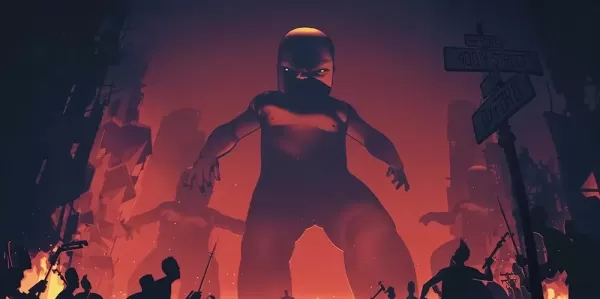
Post-pandemic LA meetings rekindled discussions. By 2023, Valley's team transformed the prose into kinetic animation while preserving its essence. Laidlaw contributed narrated passages from his pandemic-era audiobook but mostly enjoyed watching passively. "Boyega's performance and the visual storytelling elevated my teenage ambitions beyond recognition," he marvels.
The writer acknowledges this revival connects unlikely dots: his cyberpunk roots predating the genre's naming, Valve's rise, now Netflix adaptation. "Being part of cultural watersheds involves tremendous luck," Laidlaw reflects. Following his 2016 Valve departure, music replaced game development as his creative outlet – especially after sharing lost Half-Life 2 footage boosted his YouTube following.
When asked about returning to games, Laidlaw playfully suggests Kojima missed calling him for Death Stranding's dialogue polish. More seriously, he notes post-Valve offers skewed toward mobile game synopses rather than meaningful projects. "Half-Life proved less is more with game writing," he remarks. "Yet somehow I became 'the lore guy' people want drowning their RPGs in text."
The Half-Life 3 question warrants definitive closure: "That chapter ended," Laidlaw states. "New creators should own that future without old guard interference." His focus now lies elsewhere – perhaps awaiting Netflix's inevitable Half-Life adaptation pitch decades hence. Until then, "400 Boys" stands testament to how art can find its moment when least expected.




![Neko Paradise – New Version 0.18 [Alorth]](https://img.1q2p.com/uploads/03/1719595169667ef0a1c529a.jpg)