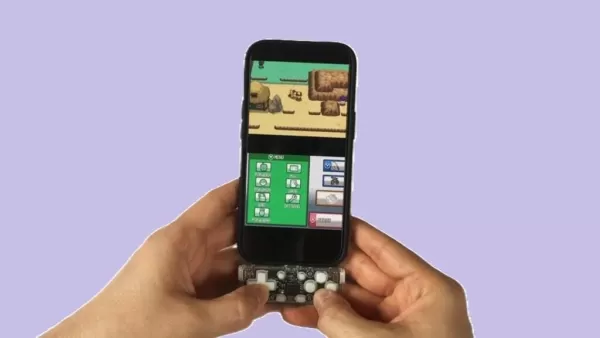
Als Spieler haben Sie wahrscheinlich die Herausforderungen beim Spielen vertikaler Arcade -Spiele auf Ihrem Telefon erlebt und die Erfahrung häufig weniger als zufriedenstellend gefunden. Geben Sie die innovative Lösung von Modder Max Kern: The Tate Mode Mini Controller ein, die genau dieses Problem behandeln. Aber löst es das Problem wirklich?
Traditionelle Controller werden in der Regel für den Landschaftsmodus gefertigt, ähnlich wie auf Geräten wie Schalter oder Dampfdeck. Viele klassische vertikale Schützen und Retro -Spiele erfordern jedoch, dass Sie Ihr Telefon im Porträtmodus halten, ähnlich wie das Scrollen durch Instagram.
Max Kern, ein kreativer Modder, hat ein kompaktes USB-C-Gamepad speziell für Portrait-Mode-Spiele entwickelt, das auch als Tate-Modus bekannt ist. Dieser winzige Controller steckt direkt in den USB-C-Anschluss Ihres Telefons ein und beseitigt die Notwendigkeit von Bluetooth, Laden oder zusätzlichen Batterien.
Max 3D-gedruckt mit einem Raspberry Pi RP2040-Chip, der Gehäuse und Schaltflächen über JLCPCB erstellt. Wenn Sie sich für einen eigenen erstellen möchten, bietet Max ein detailliertes Tutorial auf seinem YouTube -Kanal.
Was ist Ihre Meinung zu diesem Tate -Modus -Mini -Controller?
Der Controller verwendet die GP2040-CE-Firmware und Funktionen als Standard-HID-Controller, wodurch sie mit Android, iOS, Windows und Mac kompatibel ist. Diese Vielseitigkeit ist für ein so kleines Gerät beeindruckend.
Es gibt jedoch Bedenken hinsichtlich der Belastung, die sie am USB-C-Anschluss stellen könnte, da das Gamepad einen Teil des Gewichts des Telefons unterstützt. Dies könnte zu einer potenziellen Biegung des Steckers im Laufe der Zeit führen, sodass Sie sowohl das Telefon als auch den Controller während des Gebrauchs unterstützen müssen.
Auf Reddit sind Meinungen gemischt. Einige Benutzer bewundern den Einfallsreichtum, sorgen sich jedoch um Handkrämpfe und Komfort, während andere offener für das Konzept sind.
Es ist wichtig zu beachten, dass dies kein kommerzielles Produkt, sondern ein DIY -Projekt ist. Max hat alle notwendigen Firmware und Druckdateien über Thingiverse und GitHub großzügig geteilt. Was denkst du über dieses innovative kleine Gamepad? Teilen Sie Ihre Kommentare unten mit!
Verpassen Sie nicht unsere neuesten Nachrichten über das Zombie Survival Shooting RPG Darkest Days, das jetzt auf Android erhältlich ist.

"Wittle Defender" sounds like a fresh and exciting twist on the tower defense genre, blending core mechanics from tower defense, roguelike progression, and strategic card play into a tight, replayable package. Here's how you might conceptualize and pitch the game:
🎮 Wittle Defender – Where Strategy Meets Chaos
Genre: Tower Defense × Roguelike × Card-Based Tactics
Platform: PC, Mobile, Consoles
Tone: Playful, chaotic, and clever – think "Tower Defense meets Hearthstone with a dash of Darkest Dungeon’s tension."
🌟 Core Concept:
In Wittle Defender, you’re not just placing towers—you’re drawing and managing a deck of magical cards that grant abilities, summon guardians, and alter the battlefield. Each run is different, shaped by randomized maps, enemy waves, and a procedurally generated card pool. Fail? No problem—each death is a step toward mastery.
🔧 Key Mechanics:
1. Card-Driven Tower Placement
Instead of pre-made towers, you draw cards each round to build your defense.
Cards represent abilities (e.g., Ice Shard – slow enemies, Fire Orb – AoE damage, Shield Wall – block the path).
You can only play a limited number of cards per wave—strategic trade-offs are key.
2. Roguelike Progression
After each run (success or failure), you earn "Wit Points" to unlock new cards, upgrade abilities, or customize your starting deck.
Permanent upgrades let you unlock new archetypes (e.g., Nature Weaver, Clockwork Engineer, Shadow Alchemist).
Run variations: different maps, enemy types, and environmental hazards (e.g., Fog of War, Corrupted Terrain).
3. Dynamic Wave Design
Enemies aren’t just stronger—they evolve based on your deck choices.
Use too many fire cards? Infernal Golems spawn in later waves.
Rely on shields? Penetrators break through defenses.
Bosses appear every 5–7 waves, each tied to a unique card theme.
4. The "Wittle" Factor: Cute but Dangerous
All units and abilities are whimsically stylized (e.g., a floating kitten that throws shurikens, a robotic squirrel that mines gold).
Despite the cute art, the game is tough—failures are satisfying, not frustrating.
Quirky dialogue and environmental gags (e.g., a tower that only works when you name it "Sir Fluffington").
5. Combo & Synergy System
Chain cards together for powerful effects:
Spike Trap + Lightning Rune = Chain lightning across the map.
Grasshopper (summon) + Tangle Weave (debuff) = Tethered enemies to be crushed.
Cards have unique Fusion mechanics—combine two to unlock a legendary ability.
🎮 Gameplay Loop:
Start a Run – Choose your starting deck (3–5 cards) + one unique "Wittle Rune" (e.g., Frostbite, Reckless Charge).
Draw Cards – Each wave, draw 3 new cards. Spend mana to play them on the map.
Adapt – The path shifts, new enemy types appear. React fast.
Survive to Wave 20+ – Unlock the final boss, a sentient card stack that mimics your worst decisions.
Retire – Gain Wit Points, unlock new cards, and return stronger.
🎨 Art & Sound:
Visuals: Low-poly whimsy meets dark fantasy. Think Cuphead meets Baldur’s Gate 3 with a magical sticker book aesthetic.
Soundtrack: Upbeat synthwave with eerie folk melodies—music changes based on your strategy (e.g., calm when defensive, frantic when desperate).
🏆 Why It Stands Out:
No two runs feel the same. The card system ensures infinite replayability.
Smart difficulty curve. New players learn fast; veterans master combos and optimization.
High skill ceiling + low barrier to entry. Perfect for casual and competitive players.
📣 Tagline:
"Build. Adapt. Survive. Or become the joke the next player tells."
💡 Potential Franchise Expansion:
Wittle Defender: Origins – A story mode exploring how the Wittle Card System was born.
Wittle Defender: Arena – PvP mode where players battle using randomized card decks.
Would you like a prototype card list, example run script, or a pitch deck for publishers? I’d love to help bring Wittle Defender to life. 🎮🔥