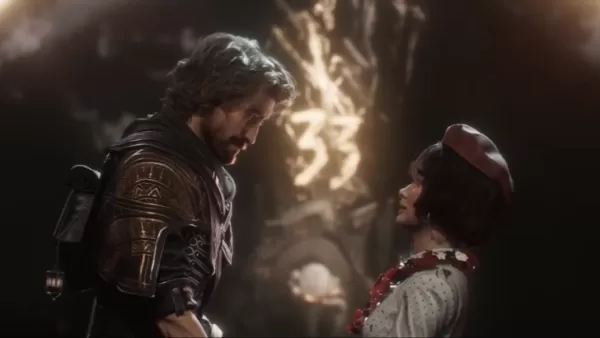
Clair Obscur: Expedition 33 hat die Gaming -Welt im Sturm erobert und beim Start eine weit verbreitete Anerkennung erhalten. Diese bemerkenswerte Leistung hat sogar die Aufmerksamkeit von Michael Douse, dem Verlagsdirektor von Baldur's Gate 3 (BG3), auf sich gezogen, der das Spiel öffentlich gelobt hat. Tauchen Sie tiefer in die Gründe für den herausragenden Eröffnungstag von Expedition 33 ein und gewinnen Sie Einblicke von Andy Serkis über die Kunst des Geschichtenerzählens innerhalb von Videospielen.
Clair Obscur: Expedition 33 ist das mit bestbewertete Spiel von 2025
Baldur's Gate 3 Publishing Director zeigt Unterstützung
Clair Obscur: Expedition 33 hat nicht nur die Spieler fasziniert, sondern auch die Bewunderung von anderen Spielentwicklern. Michael Douse, der Verlagsdirektor von Baldur's Gate 3, ging am 23. April zu Twitter (jetzt bekannt als X), um seine Unterstützung für das neu veröffentlichte RPG auszudrücken, und hob seinen Status als das bestbewertete Spiel von 2025 hervor. Mit einer beeindruckenden Gesamtpunktzahl von 92 auf dem Metacritic und dem begehrten "Must-Play" -Taagemittel 33 hat ein Ausspiel in der Gaming-Gemeinschaft schnell.

In einer bemerkenswerten Leistung ist Expedition 33 innerhalb von nur 24 Stunden nach der Veröffentlichung auf den dritten Platz unter den meistverkauften Spielen auf Steam gestiegen. Diese Leistung ist besonders bemerkenswert, da sie ihre Startwoche mit dem mit Spannung erwarteten Oblivion-Remaster teilt. Die hochwertige Gameplay und das komplizierte Geschichtenerzählen von Expedition 33 haben es jedoch im Rampenlicht festgehalten.
Hier bei Game8 haben wir Expedition 33 mit einer herausragenden Punktzahl von 96 von 100 verliehen. Wir empfehlen das Spiel für seinen innovativen Ansatz für JRPGs und mischen die Kenntnisse mit dem Frischen. Expedition 33 kombiniert meisterhaften taktischen Kampf mit Echtzeit-Interaktion und definiert traditionelle rundenbasierte Systeme durch Einbeziehung von Ausweichen, Parlaments, Zähler und zeitgesteuerten Angriffen. Eine eingehendere Analyse des Spiels finden Sie in unserer detaillierten Bewertung unten!

"Wittle Defender" sounds like a fresh and exciting twist on the tower defense genre, blending core mechanics from tower defense, roguelike progression, and strategic card play into a tight, replayable package. Here's how you might conceptualize and pitch the game:
🎮 Wittle Defender – Where Strategy Meets Chaos
Genre: Tower Defense × Roguelike × Card-Based Tactics
Platform: PC, Mobile, Consoles
Tone: Playful, chaotic, and clever – think "Tower Defense meets Hearthstone with a dash of Darkest Dungeon’s tension."
🌟 Core Concept:
In Wittle Defender, you’re not just placing towers—you’re drawing and managing a deck of magical cards that grant abilities, summon guardians, and alter the battlefield. Each run is different, shaped by randomized maps, enemy waves, and a procedurally generated card pool. Fail? No problem—each death is a step toward mastery.
🔧 Key Mechanics:
1. Card-Driven Tower Placement
Instead of pre-made towers, you draw cards each round to build your defense.
Cards represent abilities (e.g., Ice Shard – slow enemies, Fire Orb – AoE damage, Shield Wall – block the path).
You can only play a limited number of cards per wave—strategic trade-offs are key.
2. Roguelike Progression
After each run (success or failure), you earn "Wit Points" to unlock new cards, upgrade abilities, or customize your starting deck.
Permanent upgrades let you unlock new archetypes (e.g., Nature Weaver, Clockwork Engineer, Shadow Alchemist).
Run variations: different maps, enemy types, and environmental hazards (e.g., Fog of War, Corrupted Terrain).
3. Dynamic Wave Design
Enemies aren’t just stronger—they evolve based on your deck choices.
Use too many fire cards? Infernal Golems spawn in later waves.
Rely on shields? Penetrators break through defenses.
Bosses appear every 5–7 waves, each tied to a unique card theme.
4. The "Wittle" Factor: Cute but Dangerous
All units and abilities are whimsically stylized (e.g., a floating kitten that throws shurikens, a robotic squirrel that mines gold).
Despite the cute art, the game is tough—failures are satisfying, not frustrating.
Quirky dialogue and environmental gags (e.g., a tower that only works when you name it "Sir Fluffington").
5. Combo & Synergy System
Chain cards together for powerful effects:
Spike Trap + Lightning Rune = Chain lightning across the map.
Grasshopper (summon) + Tangle Weave (debuff) = Tethered enemies to be crushed.
Cards have unique Fusion mechanics—combine two to unlock a legendary ability.
🎮 Gameplay Loop:
Start a Run – Choose your starting deck (3–5 cards) + one unique "Wittle Rune" (e.g., Frostbite, Reckless Charge).
Draw Cards – Each wave, draw 3 new cards. Spend mana to play them on the map.
Adapt – The path shifts, new enemy types appear. React fast.
Survive to Wave 20+ – Unlock the final boss, a sentient card stack that mimics your worst decisions.
Retire – Gain Wit Points, unlock new cards, and return stronger.
🎨 Art & Sound:
Visuals: Low-poly whimsy meets dark fantasy. Think Cuphead meets Baldur’s Gate 3 with a magical sticker book aesthetic.
Soundtrack: Upbeat synthwave with eerie folk melodies—music changes based on your strategy (e.g., calm when defensive, frantic when desperate).
🏆 Why It Stands Out:
No two runs feel the same. The card system ensures infinite replayability.
Smart difficulty curve. New players learn fast; veterans master combos and optimization.
High skill ceiling + low barrier to entry. Perfect for casual and competitive players.
📣 Tagline:
"Build. Adapt. Survive. Or become the joke the next player tells."
💡 Potential Franchise Expansion:
Wittle Defender: Origins – A story mode exploring how the Wittle Card System was born.
Wittle Defender: Arena – PvP mode where players battle using randomized card decks.
Would you like a prototype card list, example run script, or a pitch deck for publishers? I’d love to help bring Wittle Defender to life. 🎮🔥